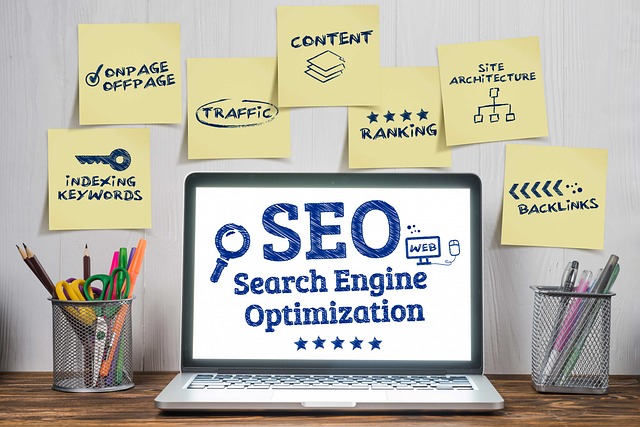
In today’s digital world, where competition for user attention is fierce, getting your website to appear in the top search results can make the difference between success and obscurity.
This is where SEO comes into play—a fundamental strategy for improving your site’s visibility on search engines and attracting qualified traffic.
What is SEO (Search Engine Optimization)
SEO, or Search Engine Optimization, is a set of techniques and strategies designed to improve a website’s visibility and ranking in the organic results of search engines like Google, Bing, or Yahoo.
The goal of SEO is to drive quality traffic to your website by optimizing various aspects both on-page (On-Page SEO) and off-page (Off-Page SEO). This includes optimizing content, site structure, loading speed, inbound links, and more.
Unlike paid advertisements, traffic generated through SEO is organic, meaning you do not pay for each click. This makes SEO a highly cost-effective long-term strategy; once you secure a top ranking for your site, you can maintain a steady flow of visitors without incurring additional costs.
Why is SEO important?
SEO is crucial for several reasons that directly impact the success of your online presence:
Visibility and traffic. Appearing in the top search results significantly increases your website’s visibility. Most users do not go beyond the first page of results, so ranking well is key to attracting visitors.
Credibility and trust. A strong search engine ranking can improve the perception of your brand and build trust with your audience.
User experience. A well-optimized site—featuring a solid structure, fast loading speeds, and relevant content—provides a better experience for visitors.
Cost-effectiveness. Unlike paid advertising, SEO is a long-term investment; once properly implemented, it can generate steady traffic without recurring costs per visitor.
Competitive advantage. Appearing in the top search results puts you a step ahead of the competition. SEO helps you stand out in a crowded market, capturing the attention of potential customers before others do.
Benefits of implementing an SEO strategy:
Implementing a well-planned SEO strategy can bring multiple benefits to your business:
Increased quality traffic: SEO attracts visitors who are actively searching for the products or services you offer, increasing the likelihood of conversion.
Improved conversion rate: By optimizing your website for a better user experience and offering relevant content, you can boost conversion rates.
Better return on investment (ROI): Organic traffic generated through SEO is typically more cost-effective in the long run compared to other digital marketing strategies.
Long-term results: Unlike paid campaigns—where effects cease once investment stops—SEO delivers lasting results that can keep your site in top positions for an extended period.
Greater market insight: Continuous analysis of keywords and user behavior provides valuable information about your market and customer preferences.
How do search engines work?
Search engines use complex algorithms to crawl, index, and rank millions of web pages. This process includes:
1. Crawling: Search engines send out bots also known as spiders or crawlers—to crawl web pages. These bots follow links and gather information about the site’s content and structure.
2. Indexing: Once the bots have crawled a page, the collected information is stored in an index, which is a massive database of all the web pages search engines deem relevant.
3. Ranking: When a user performs a search, search engines scan their index to find the pages most relevant and useful for the query. These pages are ranked in the search results based on multiple factors, such as relevance, site authority, and user experience, among others.
What types of searches are there?
There are several types of searches that search engines aim to satisfy, and understanding these types is essential for an effective SEO strategy:
Informational search: The user is looking for information or answers to specific questions. Example: “What is SEO?”
Navigational search: The user is looking for a specific website or page. Example: “Facebook login” or “CEI digital marketing courses.”
Transactional search: The user intends to perform an action, such as buying a product or hiring a service. Example: “buy sneakers.”
Local search: The user is looking for services or products in a specific location.
What Is SEO: A Beginner’s Guide
If you run a business, chances are you have a website. That is why you need to consider how you appear on Google, how potential customers find you, and what content to include on your site.
It is much like opening a brick-and-mortar store: you have to consider rent costs, the best location, and which products to display in the shop window. Answering these questions helps define a better sales strategy—and SEO should be part of that strategy.
What is SEO?
SEO stands for Search Engine Optimization. In other words, it refers to the set of strategies implemented both on and off a website to improve its visibility on search engine results pages (SERPs).
The primary goal of any SEO strategy is to enhance visibility and increase a website’s organic traffic. However, the ultimate objective—as with any marketing strategy—is to generate sales through the organic channel.
I like to think of SEO as a giant puzzle with thousands of pieces that must fit together perfectly to reveal the final picture. This metaphor isn’t far from reality, as a successful SEO strategy requires numerous actions to work in tandem.
That is why the puzzle metaphor works so well: if we lack any of the necessary pieces, we won’t be able to see the image hidden beneath.
Types of SEO:
Within an SEO strategy, we can distinguish between two main types: On-Page SEO and Off-Page SEO.
On-Page SEO:
This type of SEO focuses on actions taken within the website itself to improve its ranking in search engines. It is further divided into three main areas: technical SEO, content SEO, and SXO.
Technical SEO:
Technical SEO refers to all the improvements made “behind the scenes” of a website to help search engines—like Google—understand and rank it. This involves several actions:
Making your site crawlable and indexable: ensuring search engines can access every part of your website without obstacles.
Improving load speed: users have little patience, so you must ensure your page loads quickly. This entails technical improvements such as image compression, caching, and minifying CSS and JavaScript files, as well as improving server response times.
Ensuring cross-browser compatibility: guaranteeing that your website works across different browsers and provides a consistent experience for all users.
Maintaining website security: implementing HTTPS and ensuring the site is protected against attacks.
Optimizing your website’s code: using clean, well-organized code.
Using structured data: these act as tags that help search engines understand what your site is about.
And this is just a brief overview of everything involved in maintaining and implementing our website.
Content SEO:
These are strategies focused on helping users find us and keeping them engaged on the site. The goal is to capture visitors’ attention and maintain their interest by providing the information they are looking for. How is this achieved? Through the following steps:
Identifying keywords related to your business: To find them, you need to conduct keyword research. Simply put, it involves understanding what your target audience is searching for and how you can provide what they need.
Creating an SEO website architecture: Once you have your keywords, you must group them by search intent and organize them into a structure that makes sense for both user navigation and search engines. This means creating primary and secondary categories for your products or services based on the keywords you have identified.
Creating and optimizing quality content: Next, you need to start creating high-quality, user-focused content based on those keywords. The aim is to answer users’ questions and keep them on your website. To achieve this, you should use audiovisual elements, meta descriptions, a solid content structure, and internal and external linking.
As you can see, content SEO is no small feat. This is just a brief summary of all the work involved in improving SEO rankings. You also have to keep in mind keyword seasonality and business needs.
On the other hand, it is worth noting that content strategy is usually divided into two parts: transactional and informational—mirroring the search intent behind the keywords themselves.
Transactional content is geared more toward the business side; that is, content focused on providing information that drives conversions. You could think of it as a sort of brochure. This applies, for example, to product or service pages and the categories that encompass them.
Informational content, meanwhile, focuses on answering questions about topics that are further removed from the point of conversion. Although this might seem less relevant to the business, these pages often attract the most traffic to the site.
This is largely because they address broader concepts or themes—while still remaining within the conversion funnel. Examples of such pages include those found in a website’s blog section.
SXO:
SXO, which combines SEO and UX (User Experience), is a strategy focused on improving how visitors interact with your website. While SEO is responsible for drawing users to your site from search engines, SXO ensures they have a positive experience once they arrive.
Imagine your website is a hotel. Naturally, you want visitors to feel comfortable and satisfied during their stay. SXO ensures that every detail of the user experience is high-quality.
The goal is to make the visit to your website feel as premium as possible—like a 5-star hotel. To achieve this, you need to consider the following:
Responsive design: People access the internet from a variety of devices, including computers, mobile phones, and tablets. A responsive design automatically adjusts the size and layout of your website’s elements so they look perfect regardless of screen size.
Seamless interaction: This involves ensuring that buttons and links are visible and function smoothly. Additionally, you should verify that calls to action (CTAs)—such as “buy” or “subscribe” buttons—are appealing and easy to locate.
Measuring user satisfaction: This is done using KPIs (Key Performance Indicators), which are metrics that help you understand how visitors navigate your site. For example, you can measure the time spent on the site or which pages are visited.
Continuous improvement: SXO also entails making ongoing adjustments and improvements based on user feedback and collected data. This might include updating the design, making buttons more visible, or simplifying the navigation process.
Off-Page SEO:
Off-page SEO refers to all actions taken outside your website to improve its visibility and authority in search engines. While on-page SEO focuses on optimizing elements within your website, off-page SEO deals with external factors that influence how your site is perceived.
Link Building:
One of the most important off-page SEO techniques is link building. This strategy involves acquiring external links from other websites pointing to your own. External links drive traffic and boost your site’s authority and credibility in the eyes of search engines.
For these links to be effective, they must be high-quality and come from reputable sites—ideally, those with a low spam score. It is crucial to avoid links from sites with irrelevant or low-quality content, as Google may penalize such links if they appear unnatural.
Social Media SEO:
Another fundamental aspect of off-page SEO is social media optimization. Social networks play a significant role in a site’s visibility; these platforms function as search engines in their own right. By creating engaging content, you can generate synergies that reinforce your website’s reputation as an authority in your field.
Local SEO:
Local SEO is another key off-page SEO strategy, especially if your business has a physical location. It involves working with platforms like Google My Business to create a business profile containing the necessary information for users to find you.
You can also post promotions or business updates. Ultimately, from a strategic standpoint, it is simply another way to occupy space on SERPs. The more visible we are across any channel, the more likely users are to click through to the website and, consequently, make a purchase.
As you can see, there are many ingredients required for a perfect SEO strategy, but working on all of this without tracking performance is pointless.
With SEO, nothing is ever fully certain, as Google is quite secretive about the factors it deems important. That is why basing your strategy on the data you collect is one of the most valuable ways to understand what your target audience is looking for.
After all, not every user who visits your website is a potential conversion. That is why it is crucial to attract the right kind of user through your content. While Google has established certain guidelines, analytics are everything.
As any good SEO specialist will tell you: it depends. A sound strategy always hinges on many factors—including external ones—such as the competition, the industry, and current trends.
The Importance of SEO in Digital Marketing:
SEO plays a vital role in digital marketing. It not only helps attract organic traffic but also enhances your website’s credibility and authority. But what exactly is SEO in marketing, and why is it so important?
SEO and SEM (Search Engine Marketing) are two essential yet complementary components. While SEO focuses on organic traffic, SEM involves paid strategies to boost visibility.
SEO is a fundamental part of digital marketing because it allows your target audience to find businesses without the need for paid advertising. Here are a few reasons why it is so important:
Increased organic traffic: Good search engine rankings can attract a large number of visitors to your website at no additional cost. This translates into more opportunities to convert those visitors into customers.
Credibility and trust: Users tend to trust organic search results more than paid ads. Appearing at the top of search results can improve the perception of your brand and build greater user trust.
Improved user experience: SEO practices involve optimizing content and website structure, resulting in a better user experience. This can lead to higher visitor retention and lower bounce rates.
Cost-effectiveness: Unlike paid advertising campaigns (SEM), SEO focuses on attracting organic traffic, which can be more cost-effective in the long run. Although it requires an initial investment of time and resources, the benefits can last much longer once good rankings are achieved.
Competitive advantage: In an increasingly competitive digital market, an effective SEO strategy can set you apart from your competitors. If your website is optimized for SEO and your competitors’ are not, you hold a significant advantage.
In short, SEO is important for marketing because it serves as another channel to reach your target audience and drive sales—or, if your website has a different objective, to gain greater market visibility.
How do you develop a solid SEO strategy?
With everything we’ve shared, you have the foundation for a top-notch SEO strategy. However, let’s organize that information so you don’t put the cart before the horse:
Keyword research: Identify relevant terms your potential users are searching for. Use tools like Google Keyword Planner.
SEO architecture: Create a page structure that makes sense—grouping terms by search intent and organizing products or services logically based on how users perceive them. For example, if you have an outdoor gear website, a tent should fall under the “camping” category. Finally—and crucially—implement internal linking to guide the user toward conversion without losing them along the way.
SEO audit: Evaluate your website to detect technical and content-related issues. Improve speed, structure, and mobile compatibility.
On-page optimization: Optimize titles, meta descriptions, headings, and URLs. Create high-quality content that incorporates keywords naturally.
Technical optimization: Ensure fast loading speeds, a clear structure, and a mobile-friendly site.
Content strategy: Plan a regular publishing schedule. Create relevant, valuable content while using keywords strategically.
Link building: Acquire quality links from other relevant sites. Leverage guest blogging and collaborations.
Monitoring and analysis: This is the most critical part of an SEO strategy. Without data, there is no strategy. Use tools like Google Analytics and Google Search Console to track performance. Generate reports and adjust your strategy based on the results; in SEO, nothing should be taken for granted—continuous testing is essential.
Continuous adaptation: Adapt or die. Keep your content up to date and stay on top of SEO trends to adjust to changes in search algorithms.
Consistently implementing these steps will improve your website’s visibility and performance on search engines.
What should I study to become an SEO professional?
If you want to become an SEO professional, there are several educational paths you can take. One option is to take specialized courses, which will provide you with the technical and strategic skills needed to optimize websites and improve their visibility in search engines.
However, the key to excelling in SEO is having a broad overview of digital marketing. This means understanding how SEO fits into the wider marketing landscape. That is why it is important to get training in Marketing and Advertising.
Dubai SEO Company will learn how to plan campaigns, analyze the market, and work with social media—skills that will help you see how all the pieces fit together. This is the first step toward becoming a well-rounded professional and revealing the full picture formed by the pieces of your puzzle. 23.8.2026